
Entry 09Third watch · Rules & Safety4 min
The Atlantic hurricane season runs from June 1 to November 30, according to the National Hurricane Center. For a boat owner in Fort Lauderdale the question is not whether to have a plan but which plan, and it has to be settled before a storm appears on the forecast, because once a watch is issued everyone on the water is trying to do the same thing at once.
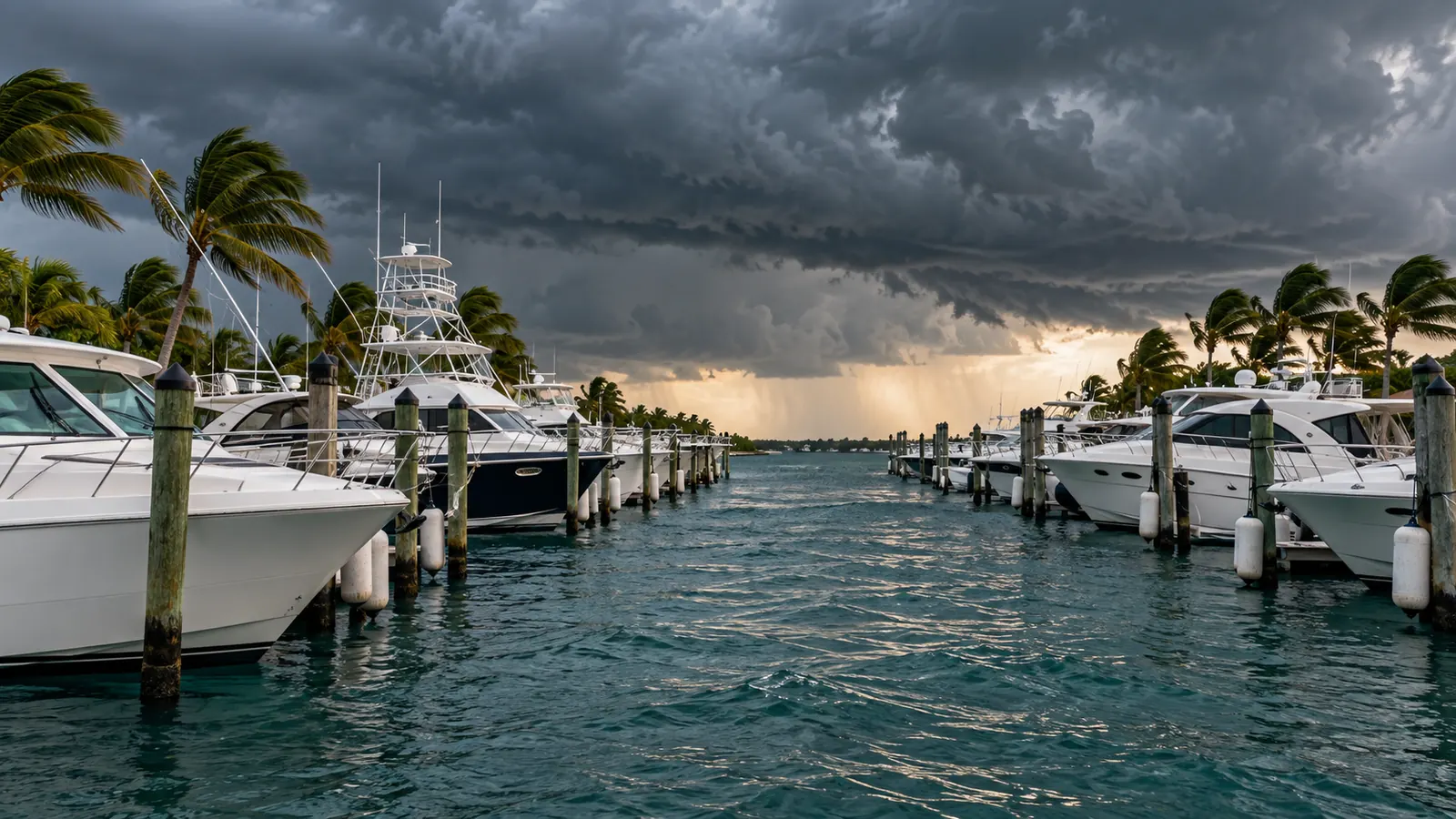
How often storms threaten
NOAA’s Coast Pilot, the official sailing directions for this coast, gives a sober picture of Port Everglades and the waterways around it:
- Tropical cyclones threaten the port, meaning they move within 180 miles of it, once or twice a year on average, and about half of them are hurricanes.
- About 83 percent of all threats have come in August, September and October, but the port has also been affected in December, February and May.
- Storm tides have exceeded 12 feet at Fort Lauderdale in the past, and the low barrier islands leave the whole Intracoastal Waterway in the area exposed to severe flooding.
First choice for small boats: get out of the water
The Coast Pilot is direct about the thousands of shallow-draft boats in the canals north of Port Everglades: if feasible, they should be removed from the water and transported inland to higher elevations. It adds that, with so many boats, it may not be possible to move along the Intracoastal Waterway to shelter up a canal or river unless you leave quite early. For a boat that can go on a trailer, the plan is simple: know where the trailer is, know where the boat will be stored, and haul out early.
If a boat must stay moored, the same guidance is to ballast it to sit low in the water, to reduce the effect of the wind, and to secure it well with allowance for increased water heights. The Coast Pilot points to the Hurricane Havens Handbook for the North Atlantic Ocean for more detail.
What a marina can and cannot do
Section 327.59 of the Florida Statutes sets the ground rules, and every boat owner with a slip should know them:
- Marinas generally may not adopt or enforce policies requiring boats to be removed after a hurricane watch or warning, so that owners’ lives come before property.
- You may still take your boat out of a marina voluntarily at any time.
- A marina may set the kind of cleats, ropes, fenders and other measures required as a condition of using the marina.
- After a tropical storm or hurricane watch is issued, the marina may take reasonable actions to further secure any boat and may charge a reasonable fee.
- A marina may provide by contract that, if you fail to remove your boat promptly after a watch, it may move the boat if reasonable or otherwise secure it, and charge you a reasonable fee. The contract must carry a specific notice in at least 10-point type.
- A marina is not liable for storm damage to your boat, except for damage caused by its own intentional acts or negligence while moving or securing it.
Tip: Find the ‘Notice to Vessel Owner’ in your slip contract and agree in writing on what ‘promptly’ means for your boat. The law leaves the timeframe to you and the marina.
The deepwater port rule
Marinas inside a deepwater seaport such as Port Everglades are treated differently. When a hurricane watch affects their waters, vessels under 500 gross tons may not remain in marinas that have been deemed not suitable for refuge, and owners must promptly remove their boats when the port issues an evacuation order. If the Coast Guard sets port condition Yankee and a boat is still there, the marina must remove it, if reasonable, regardless of the contract, and may charge a reasonable fee. The port may also fine an owner who ignored its order, up to three times the cost of removing the boat.
A boat at risk after the storm
A damaged boat left in the water can create new problems. Florida’s law on vessels at risk of becoming derelict, section 327.4107, lists conditions such as taking on water without an effective way to pump it out, listing from water intrusion, or breaking loose from an anchor. A boat in that condition may not anchor, moor or occupy state waters, and doing so is a noncriminal infraction. Check on your boat as soon as it is safe and deal with damage quickly.
Checklist to finish before June 1
- Decide: haul out and store inland, stay in the slip, or move to a sheltered spot, and write down the trigger for each step.
- If you will haul out, book the haul-out or confirm your trailer and tow vehicle are ready.
- Read your slip contract’s storm clause; see Renting a Boat Slip in Fort Lauderdale: How Dockage Is Priced and What to Ask Before You Sign.
- Buy extra lines, chafe gear and fenders now, not during a watch.
- Photograph the boat and keep registration and insurance papers off the boat; see Florida Boat Registration: Who Needs It, What It Costs by Length and How to Display the Numbers.
- Know your route out, including bridge clearances and schedules; see Bridges and Clearances on Fort Lauderdale’s New River: Heights, Rush-Hour Rules and the FEC Railroad Bridge.
- If you are weighing a dry stack for storm season, compare it in Dry Stack or Wet Slip in Fort Lauderdale? How to Choose Where Your Boat Lives.