Every guide on the site as one log, watch by watch: slips and marinas, on the water, and rules and safety.
First watchSlips & MarinasRenting a slip, the city marinas, dry stack or wet slip, and living aboard.
- 014 min
Renting a Boat Slip in Fort Lauderdale: How Dockage Is Priced and What to Ask Before You Sign
How dockage in Fort Lauderdale is priced, using the City of Fort Lauderdale’s own rate card as a worked example: per-foot rates, the 35-foot minimum, utilities, sales tax and deposits, plus the contract terms worth reading before a hurricane season.
- 024 min
Fort Lauderdale’s City Marinas: Cooley’s Landing and the New River Downtown Docks
What the City of Fort Lauderdale runs on the water: Cooley’s Landing and the New River/Downtown Docks, their amenities and office hours, how first-come, first-served dockage works, the free pump-out stations, and what the Coast Pilot says about berthing on the New River.
- 034 min
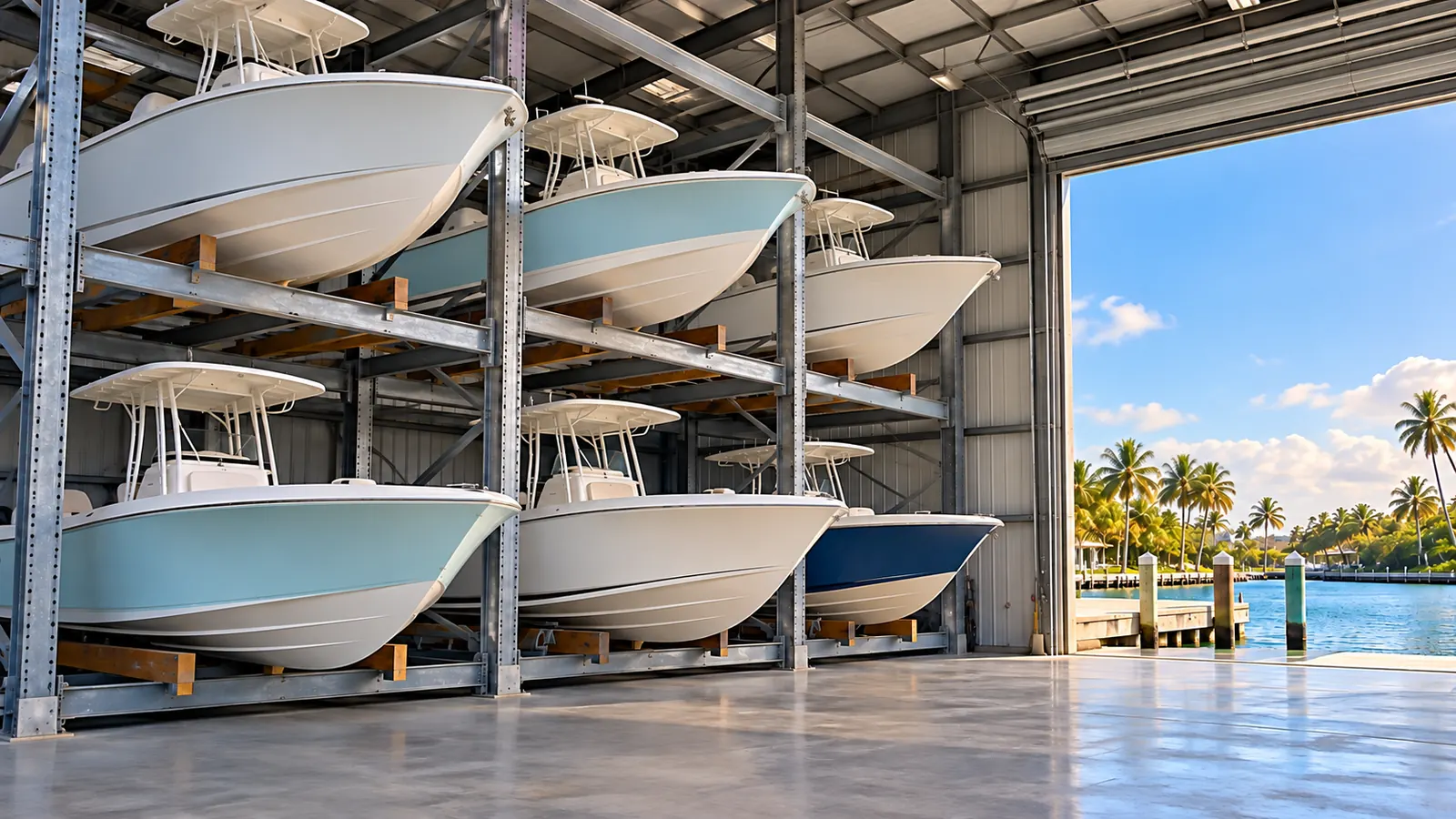
Dry Stack or Wet Slip in Fort Lauderdale? How to Choose Where Your Boat Lives
The trade-offs between keeping a boat in the water and storing it on a rack ashore in Fort Lauderdale: cost structure, convenience, utilities, live-aboard limits and, above all, hurricane season, with what NOAA’s Coast Pilot and Florida law say about boats in a storm.
- 044 min
Living Aboard a Boat in Fort Lauderdale: What Florida Law Says and What to Ask a Marina
What counts as a live-aboard vessel under Florida law, how much room the state gives cities and counties to restrict live-aboards and anchoring, the toilet and sewage rules every boat with a cabin must follow, Fort Lauderdale’s free pump-out stations, and the questions to settle with a marina before you move aboard.
Second watchOn the WaterThe Port Everglades inlet, no-wake and manatee zones, the New River bridges and the boat ramps.
- 054 min
Boating Through the Port Everglades Inlet: Currents, Big Ships and Rules for Small Craft
What NOAA’s Coast Pilot tells small-boat skippers about the Port Everglades entrance: unmarked submerged breakwaters, cross currents, heavy weekend traffic, giving way to cruise ships and tankers, where not to anchor, the naval restricted area, tides and the weather that makes the inlet rough.
- 064 min
No-Wake and Manatee Zones in Broward County: Idle Speed, Slow Speed and the 25 MPH Rule
How Florida’s manatee protection rule for Broward County works: what idle speed and slow speed legally mean, the year-round and winter-season zones around Fort Lauderdale, the New River and Port Everglades area, the 25 mph limit with a slow-speed shoreline buffer on the Intracoastal, and the no-entry zone at the power plant.
- 074 min
Bridges and Clearances on Fort Lauderdale’s New River: Heights, Rush-Hour Rules and the FEC Railroad Bridge
The bridges a boat meets going up the New River from the Intracoastal Waterway, with closed clearances from NOAA’s Coast Pilot, the federal rules that let some draws stay shut at rush hour, how the Florida East Coast Railway bridge opens on a fixed schedule, and the radio channels to use.
- 084 min
Launching at a Fort Lauderdale Boat Ramp: City Ramps, Paperwork and a Smooth Launch
Where the City of Fort Lauderdale lists public boat launching, what to check before you tow a boat to a ramp, the registration numbers, decal and documents Florida law requires aboard, which small boats need no registration at all, and a ramp routine that keeps the line moving.

Third watchRules & SafetyHurricane plans, registration, the boater education card, fuel docks and pump-outs.
- 094 min
Hurricane Plans for Boats in Fort Lauderdale: What Florida Law Lets Marinas Do and How to Prepare
A hurricane plan for a boat kept in Fort Lauderdale: how often storms threaten the area according to NOAA’s Coast Pilot, why hauling out and moving inland is the first choice for small boats, what Florida’s marina evacuation law allows marinas to do after a watch, the special rule for marinas in a deepwater port, and a checklist to finish before June.
- 104 min
Florida Boat Registration: Who Needs It, What It Costs by Length and How to Display the Numbers
Florida’s vessel registration rules for a boat kept in Fort Lauderdale: which boats must be registered, the annual state fee for each length class from the statute, the discount for carrying an EPIRB or personal locator beacon, transfers after a sale, displaying numbers and the decal, and the penalties for an expired registration.
- 114 min
Florida Boating Safety Education Card: Who Needs One, How to Get It and the Exemptions
Florida’s boater education requirement in plain terms: the January 1, 1988 birthday rule and the 10-horsepower threshold, what documents must be aboard, how the lifetime card and the 90-day temporary certificate work, visitors from other states, the exemptions that cover new boat buyers and supervised operators, and the penalty.
- 124 min
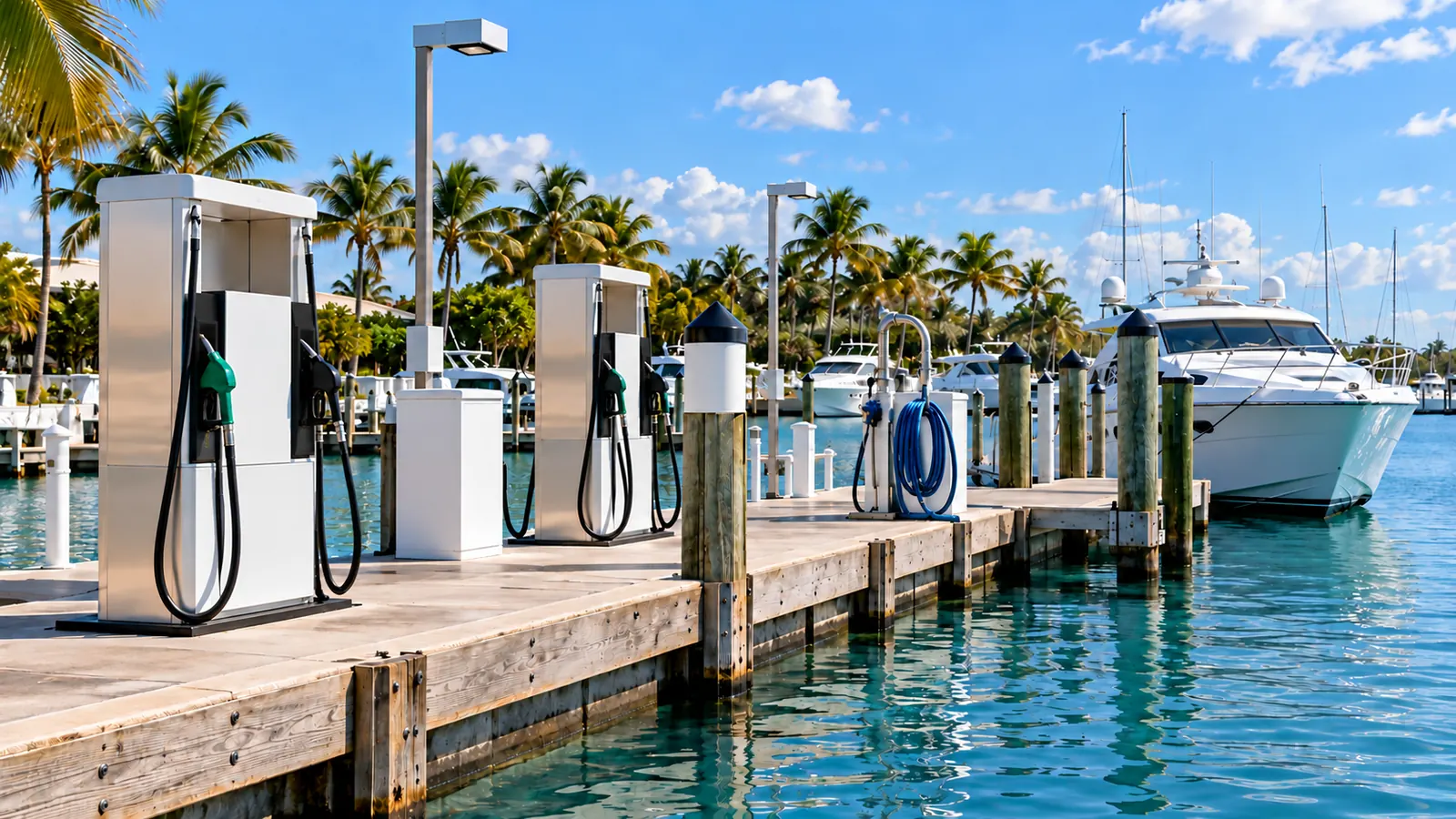
Fuel Docks and Pump-Out Stations in Fort Lauderdale: Where to Fill Up and Empty the Tank Legally
Where to fuel and pump out a boat in Fort Lauderdale: the city’s four free pump-out stations and their hours, truck fueling at the downtown docks, marinas the Coast Pilot lists with fuel and pump-out, Florida’s marine sanitation law and its $250 penalty, and habits that keep fuel out of the water.